One of the toughest adjustments coming from tennis to pickleball doubles?
Not trying to blast everything.
In tennis, if you see two players at net, your instinct is to drive it through them or rip a pass. In pickleball, that usually just means you’re hitting into a wall.
Lately, I’ve been working on a shot that’s helped rewire that instinct — what I call the “drip.”
It’s not a full drive.
It’s not a soft drop.
It’s something in between.
And when you combine it with outside contact, it becomes really effective.
What Is the Drip?
The drip is basically a hybrid between a drive and a drop.
You’re taking a firm swing — not babying the ball — but you’re shaping it so it has:
- Spin
- Margin over the net
- Late dip into the kitchen
The goal isn’t to hit a winner.
It’s to:
- Neutralize the point
- Earn your way forward
- Or force a pop-up
For someone with tennis instincts (recovering banger here), this has been a big shift.
The Real Key: Outside Contact
The drip doesn’t work without the right contact point.
The biggest difference-maker for me has been focusing on brushing the outside of the ball.
That outside contact creates:
- Combination of top spin and side spin
- Natural movement
- And most importantly — late dip
Without that brush, the ball floats and becomes attackable.
With it, the ball looks hittable… until it suddenly drops.
That late movement is everything.
The Video: Why It Matters
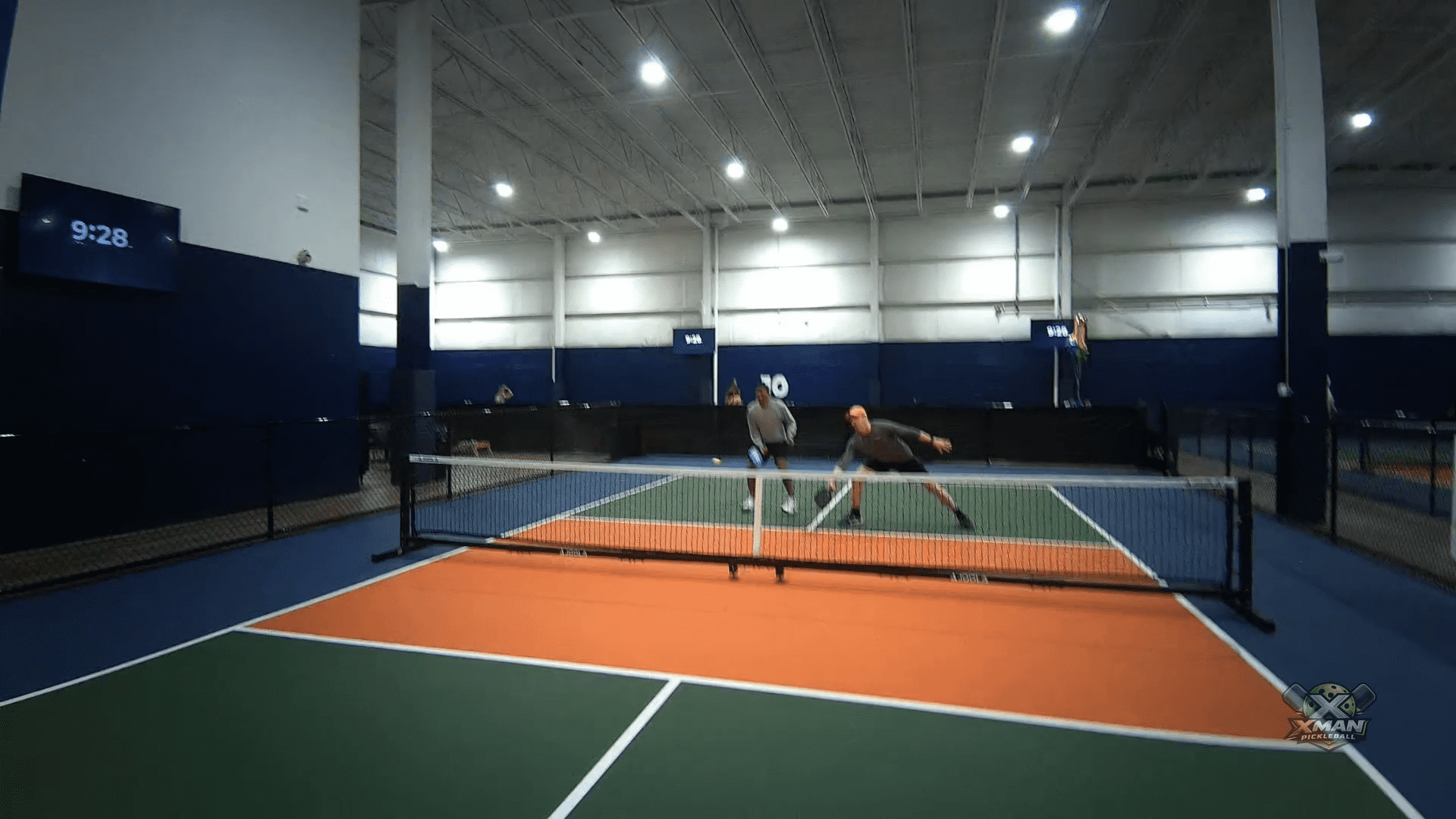
In the clip I’m sharing, my partner drives the 3rd.
I step in and hit the 5th as a drip, brushing the outside of the ball.
The point ends with the opponent frozen.
The ball dips down and slightly away from him because of that outside contact. He reads it one way, but the spin changes the trajectory late.
That moment perfectly shows why:
- The drip works
- Outside contact matters
- Shape beats flat pace
I didn’t win that point because I hit harder.
I won it because the ball behaved differently.
How This Applies to Singles
This isn’t just a doubles concept.
In singles, the drip can be even more disruptive.
Players are covering more court. If you hit a ball that:
- Starts on one line
- Dips late
- And moves slightly away
You force them to adjust mid-step.
That can:
- Draw a weak reply
- Force a defensive contact
- Or open up the next passing lane
In doubles, the drip helps you earn the kitchen.
In singles, it can stretch the court and create space.
Either way, the principle is the same:
Make the ball move differently than your opponent expects.
Final Thought
Improvement isn’t always about swinging harder.
Sometimes it’s about learning how to shape the ball.
The drip — combined with outside contact — has been one of those small adjustments that’s made a big difference in how I build points.
Still learning. Still refining.
But when you see an opponent freeze because the ball dipped late?
You know you’re onto something.